Incredible-India
Ask anyone to describe India and the word “enigma” often comes to mind. From its snow covered mountains to its pristine white sandy beaches India’s diversity enthrals the visitor every time.
There is much to see and do in India, whether your passion is for cultural and spiritual guidance, or perhaps history is your yearning, in which case India has many revered ancient sites full of philosophic ideals, as well as grand remnants from the British occupation or maybe you just want to immerse yourself with the locals, India has it all in great abundance.
India can be for a visitors perspective divided into 5 distinct regions, they are:
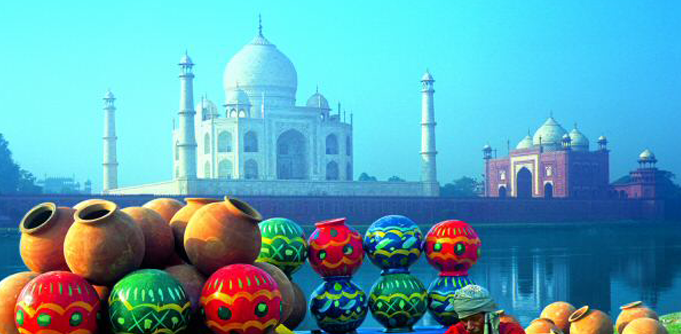
NORTH INDIA - Stretched out at the feet of the majestic Himalayas, encompassing the high mountain cities at the roof of the world, the verdant flood plains of the River Ganges as well as the arid gold of the western desert. North India presents a vibrant cultural kaleidoscope. This vast expanse of country is harmonised by a variety of people; introduced by invaders, settlers, explorers, missionaries, envoys and traders. Since the passage of time India cannot be marked by a calendar, it is not an anomaly to find the shades of eras past living comfortably and at peace on the road to the future.
SOUTH INDIA – The leitmotif of southern culture is its tapestry of magnificent temple architecture going back to the 6th century; the unaltered traditions of food, religion and lifestyle; handicrafts; heritage of sandalwood, silk, rosewood and brass; and, of course, the grandeur of classical dance and music. This is a land of temples, a land of the devout, a profusion of jasmine and “kanakambaram” flowers and the soft beat of drums heralding the beginning of another celebration. But under such superficial though attractive similarity there runs the distinctive character of each state: Pondicherry and Lakshadweep even more different from the four highly individual states of Tamil Nadu, Andhra Pradesh Karnataka and Kerala.
CENTRAL INDIA – Wild life at its best. From the western Vindhya Range to the Hazaribagh Range in the east, the heart of India is a land of rolling mountains and ruins. Ruled for 200 years by the fantastically wealthy Nizams and Mughals, their legacy can be seen in the palaces, tombs and mosques that clutter the landscape. The jungles and national parks shelter tigers and leopards, elephants and eagles, not to mention indigenous Indian tribes such as the Gound and Baiga.
WEST INDIA – The west of India is defined by the multitude of influences apparent in the culture. This was where trade was carried out; where ships from other civilisations docked, exchanging goods and ideas and even communities. Offshore, the mystical port city of Dwarka, which was founded by Lord Krishna 5000 years ago, has been recently excavated. Evidence of ongoing trade with Central Asia during Harappan times was discovered in Lothal, dating back 3500 years. The rock cut caves at Ajanta and Ellora movingly record the earliest mingling of faiths and in Goa, the mingling of cultures create vivacity, exuberance and livelyness.
NORTH EAST INDIA – In the fertile delta of the River Ganges flourished many ancient kingdoms. Here took place events that changed the course of history for India. This is where Mahavira and the Buddha preached an alternative gentle way of life. The British transformed from being traders to become the Supreme rulers of India; Bringing with them the knowledge to alter and create what was once an incredibly rich hinterland to an industrialised nation. Even so in this region today the many distinctive tribal people still live their lives and keep their culture showing endurance far beyond the continual changes of time.